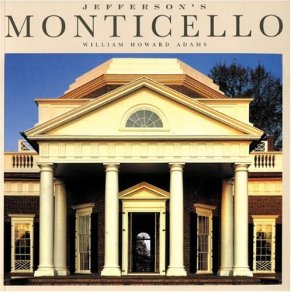
We visited Monticello on June 18, 2016.
It was a wonderful visit, but some of you will know that was an amateurish pick of visit times; perhaps those of you from Virginia or those who have visited Monticello on a weekend in mid-Summer with a British invasion reenactment taking place on the front lawn.
The resulting experience was Disney-esque. First, there was the ticket counselor to walk us through the options. Then there was the tram ride from the bottom of the mountain to the Magic Kingdom. Then there was the line to get into the Haunted Mansion. And once inside, there was our party and 30 of our closest new friends crammed into a small room looking up at paintings. I was half expecting the walls to rise.
I could carry the metaphor on and on, but the really important thing to note is that Monticello is an amazing place to visit, but “in season” it has crowd issues. Two days later, we met a charming couple from South Carolina at Thomas Jefferson’s Poplar Forest. They gave us the straight truth. “You need to go in October or November.” And so we shall.
When I arrived back home and started flipping through one of my books on Monticello, I came across one of Thomas Jefferson’s ideas that just might help with summertime crowds. The Monticello folks will love the idea because it comes straight out of the Disney playbook. They simply need to build a new park.
They can call it Montebello.
This will only happen after a tremendous dispute between the Monticello marketing team and Monticello historians, who will rightfully want to name it Montalto. I’ll explain why in a moment.
Monticello sits high upon its hill. The hill was actually 12 feet higher, but Jefferson had it leveled to accommodate both his home and a beautiful front lawn. Monticello is just about higher than any other hill in the surrounding region, except for neighboring Montalto. As you tour Monticello’s vegetable gardens, you can’t help but miss Montalto and you may even wonder to yourself why Jefferson didn’t place his home on Montalto instead.
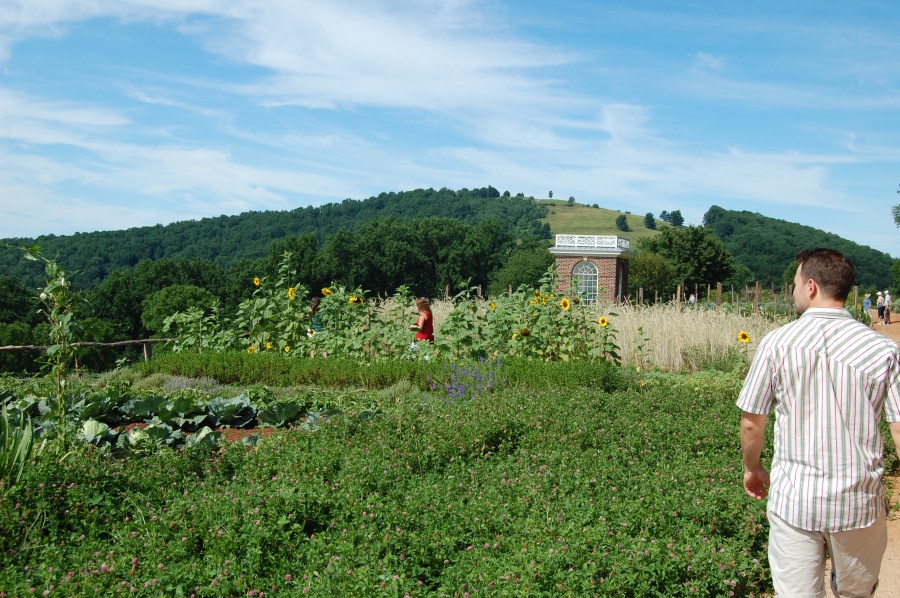
The view of neighboring Montalto from Monticello’s vegetable gardens.
Thomas Jefferson didn’t actually own Montalto until October of 1777, but once he did own it, he had at least one idea about what he wanted to do with it. Remembering that Jefferson was, among other things, an architect, an astronomer, a builder and a dreamer, it shouldn’t surprise us to know that he had the idea of erecting a 200 ft. tower on top of it. He drew up two different designs, one that seems to match Monticello in general look and construction.
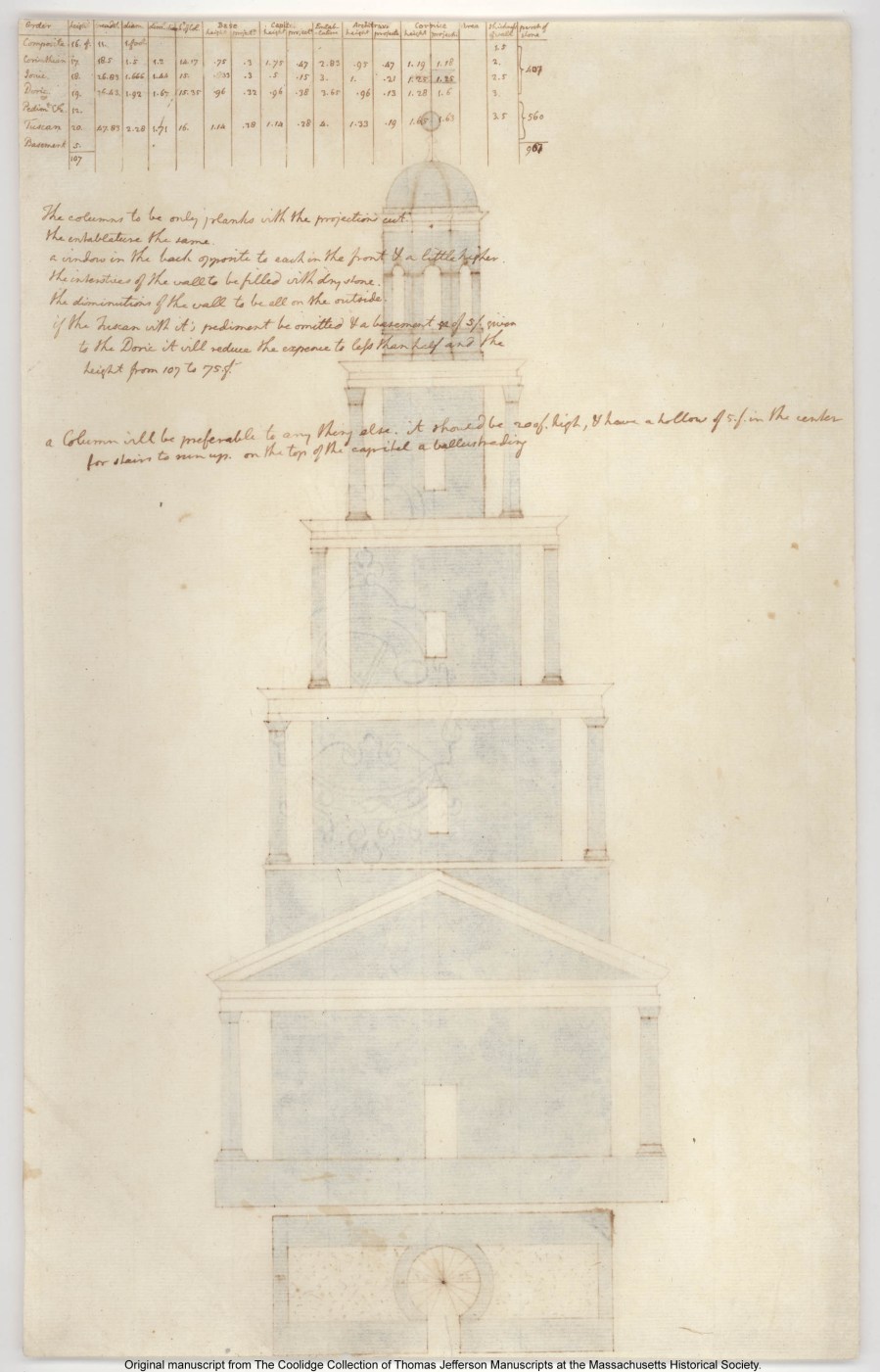
Original manuscript from The Coolidge Collection of Thomas Jefferson Manuscripts at the Massachusetts Historical Society.
Montalto sits 410 feet higher than Monticello, so the resulting tower would’ve given Jefferson a view of Monticello from an elevation of 600 ft and certainly it would’ve given him the best view of both the stars and the surrounding region.
But why not build it today? Certainly people would jump at the chance to visit Jefferson’s tower on Montalto. We have his rough sketches from which to build and its construction would not likely mar the landscape like a cell tower or billboard. It would enhance the idea that Thomas Jefferson had ideas enough for several lifetimes.
And, of course, tourists headed to Montalto might just thin the crowd at the home estate, like opening Epcot alongside of Disneyworld. Montalto is certainly large enough to handle the crowds and you could probably fit another gift shop and a museum up there.
For now, we’re left with nothing but Jefferson’s paper dreams. Perhaps one day someone will have the foresight to complete Jefferson’s tower on top of Montalto. We’ll side with Marketing when they call it Montebello.
For more on Monticello, including photos of rooms you won’t see on the tour, read Jefferson’s Monticello by William Howard Adams.